CommHATS Heat Adaptation & Treatment Strategies Back to Balsari Lab
A South Asia Climate Adaptation Cluster study · Harvard

Personalizing heat exposure, at scale.

Community Heat Adaptation and Treatment Strategies in South Asia

800 women workers from the Self Employed Women's Association are partnering with Harvard to track how extreme heat reshapes their health, homes, and wages — day and night, across seasons.

Work with us
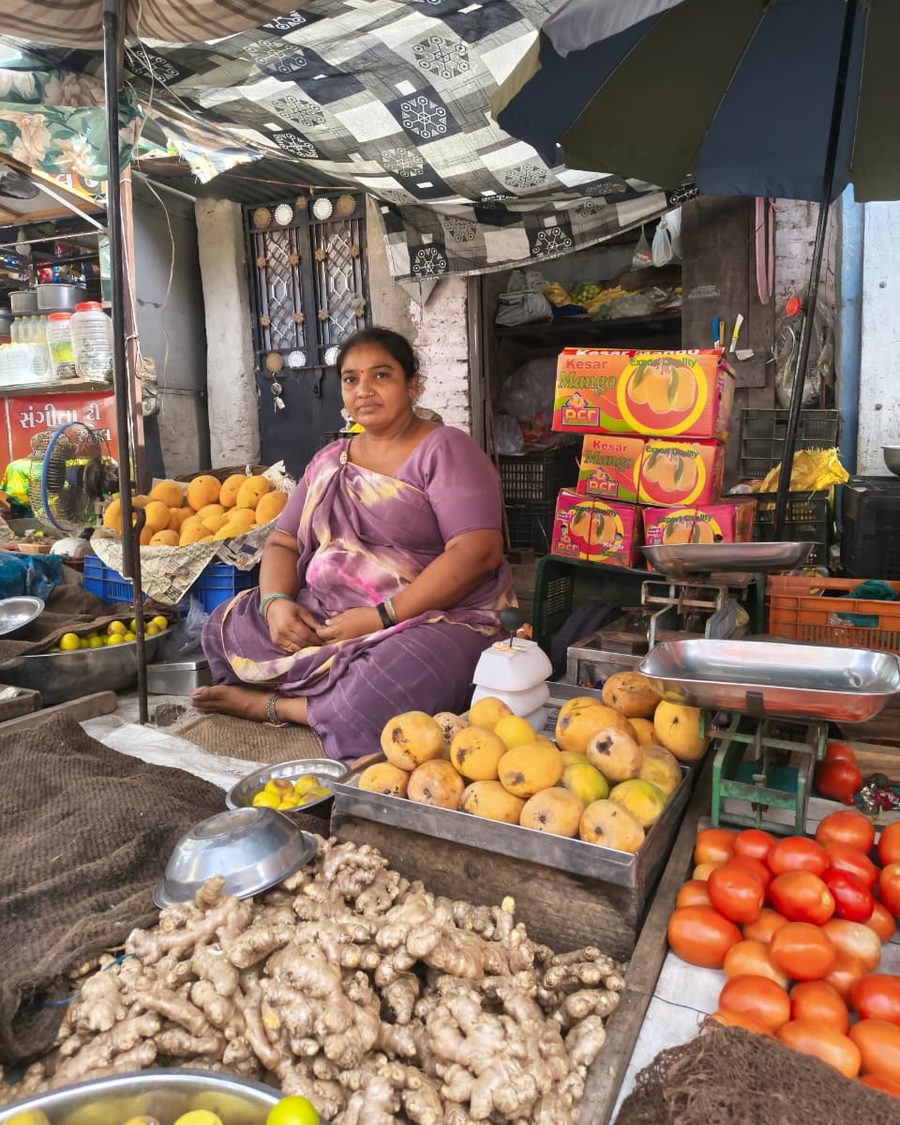
A SEWA member at her market stall in India, surrounded by produce.
A SEWA member at her market stall — western India
800
SEWA women workers leading the study
8M+
Person-hours of data collected
13
Months tracking health & habitat
150K+
Lines of open-source research code
What is CommHATS?

One of the largest worker-led climate-health datasets in the world.

800 women workers in India's informal labor economy — all members of the Self Employed Women's Association (SEWA) — are partnering with the South Asia Climate Adaptation Cluster at Harvard on a 13-month study tracking the impact of heat in the lived environments of the poor, at work and at home, on health, habitat, and wages.

Built on over 8 million person-hours of data, CommHATS is compiling one of the largest worker-led climate-health datasets globally. Early findings are expected to inform worker protections, thresholds for early warnings, and guidance on heat action plans and adaptation strategies.

Why CommHATS?

Research designed, run, and owned by the women it studies.

i.

Citizen science

The study is administered and supervised entirely by the workers themselves, through weekly site visits and frequent town halls. Research questions are co-developed by SEWA members seeking to inform individual, household, and collective adaptation.

ii.

Purpose-built architecture

Over 150,000 lines of built-for-purpose code support CommHATS data collection apps, pipelines, analytic tools, and reporting dashboards. The modular architecture keeps the toolkit replicable and open source.

iii.

Real-world application

CommHATS gives communities cutting-edge tools to test adaptive strategies — reflective cool roofs, shaded market stalls, parametric insurance — before they are deployed at scale.

Early findings

What weather stations record is not what the poor live through.

10°C
gap between official readings and the actual lived environments of the poor — roughly 18°F

Early findings suggest significant gaps between temperatures recorded by weather stations and satellites and the conditions people actually endure. The homes of the poor do not cool down overnight, and the physiological strain on the women persists for months. The impact of extreme heat on their wages is crippling.

Peer-reviewed publications expected in late 2026
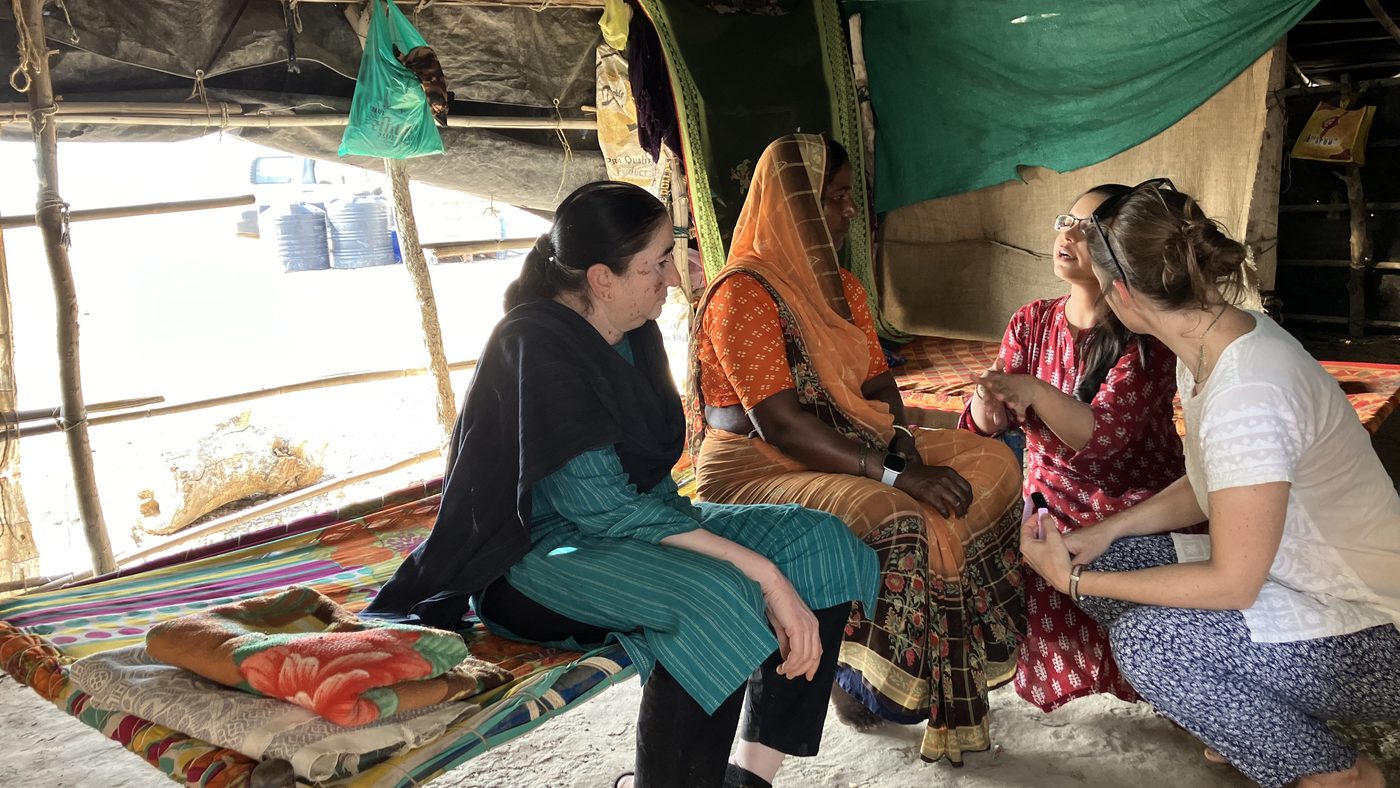
Researchers in conversation with SEWA workers inside a home during fieldwork.
Field interviews in workers' homes — documenting heat in the lived environment
Implications

Grounding policy in the lives it claims to protect.

CommHATS will directly inform policies that have, until now, been developed with little empirical grounding in the lives of informal workers. By tracking participants across all seasons and multiple years, the study can evaluate whether interventions actually work in the settings where they matter most.

Final results will bear on city-wide early warnings, worker protection thresholds, health protection measures, and the prioritization of contextually-relevant adaptation strategies.

Interdisciplinary Research Team

The people behind the study.

Members of SEWA

800+ participants and field supervisors

Satchit Balsari

Associate Professor, Harvard Medical School

Caroline Buckee

Professor, Harvard School of Public Health

Robert Meade

Research Scientist, Harvard Medical School

Gary Adamkiewicz

Associate Professor, Harvard School of Public Health

Mihir Bhatt

Director, All India Disaster Mitigation Institute

Felipe González-Casabianca

Junior Research Fellow and PhD Student, Tartu University

Rajan Rawal

Professor, CEPT University
Advisors

Tarun Khanna

Harvard Business School

Daniel Schrag

Harvard Kennedy School

Peter Huybers

Faculty of Arts and Sciences

Jennifer Leaning

Harvard School of Public Health
Collaborators & funders

Built with partners across research, civil society, and philanthropy.

SEWA — Self Employed Women's Association
CEPT University
All India Disaster Mitigation Institute (AIDMI)
Wellcome
Minderoo Foundation
The Salata Institute for Climate and Sustainability at Harvard University
The Lakshmi Mittal and Family South Asia Institute, Harvard University
Beth Israel Deaconess Medical Center — Emergency Medicine
Publications & press

In literature and in the news.

Working with us

A modular toolkit built to travel.

Our flexible study design deploys across a range of settings with varying levels of data literacy and resource constraints. To learn more, get in touch.

rmeade@hsph.harvard.edu